19 Striking Floor Vases for Bold Home Statement
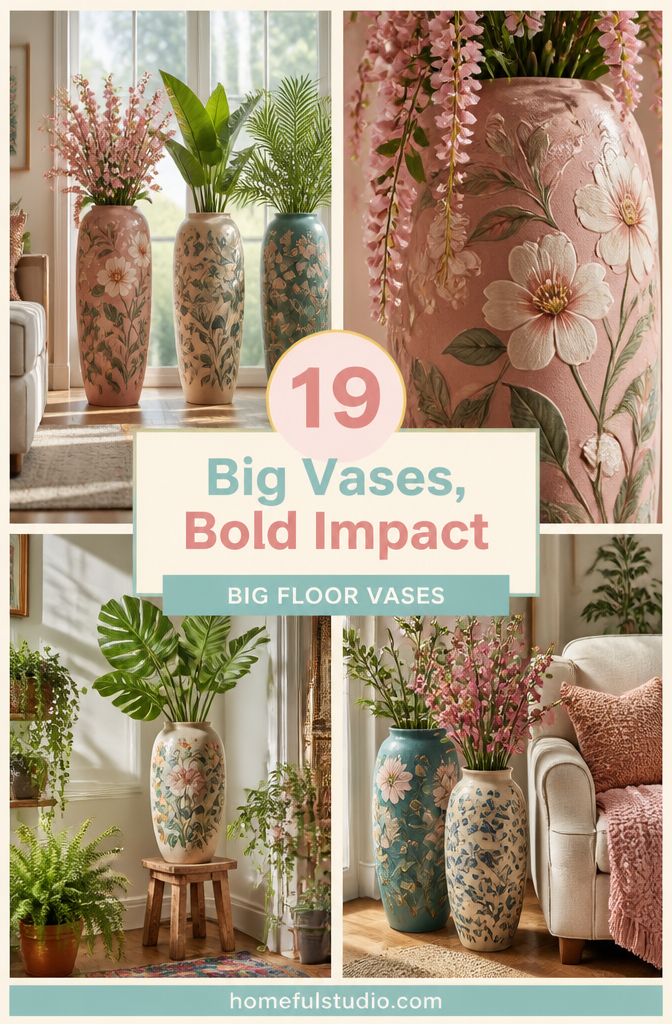
A single oversized vessel can change the entire mood of a room. Floor vases bring scale, color, and texture into overlooked corners, turning ordinary spaces into intentional compositions. Whether filled with sculptural branches or left beautifully empty, big vases offer statement decor that feels collected rather than cluttered. The most memorable artistic vases balance form with function: they catch the eye, support the room’s palette, and make everyday home decor feel more personal.
Choose the Right Scale for Your Space
Before falling for a shape, measure the space it will occupy. A vase that looks striking in a showroom can overwhelm a narrow hallway or disappear beside a large sectional.
- Measure ceiling height, furniture depth, and the width of the corner where the vase will stand.
- Allow at least a few inches of clearance from doorways and walking paths so the piece never becomes an obstacle.
- Match visual weight to the room: a tall, slim vase works beside a slender console, while a broad vessel anchors a spacious living room.
- Consider sightlines. Place big vases where they can be seen from a seated position, such as beside a sofa or at the end of a corridor.
- For open-plan rooms, use a pair of floor vases to create a subtle boundary without adding a wall.
A useful rule is to begin with the room’s largest furniture piece. If your sofa is low and long, choose a vase with height but a modest footprint. If your room has tall ceilings, go for a vase that reaches toward the upper third of the wall to maintain proportion.
Select a Color Palette That Supports the Room
Color determines whether a vase feels harmonious or jarring. Soft blush, muted clay, freshwater teal, and warm cream are versatile starting points because they read as natural and calm while still offering contrast.
- In neutral rooms, a muted clay vase adds earthy warmth without competing with textiles.
- In cool-toned spaces, freshwater teal introduces a gentle pop that feels collected rather than loud.
- In warm interiors, soft blush complements timber, linen, and terracotta beautifully.
- In busy rooms, warm cream keeps the eye at rest and lets surrounding art take the lead.
Repeat one element of the vase’s color elsewhere in the room: a cushion, a book spine, or a small ceramic piece. This repetition makes the vase feel integrated. Avoid matching every accessory exactly; subtle echoes are more sophisticated than identical sets.
Style Floor Vases With Confidence
An empty vase can look intentional, but the right styling makes it feel finished. Choose one approach and keep it simple.
- Use tall branches for height and movement. Birch, willow, dried eucalyptus, and pampas stems create airy silhouettes without heavy maintenance.
- Choose a single sculptural branch for minimal rooms where clean lines matter.
- Group two or three vases of different heights for a layered composition. Place the tallest at the back and the smallest in front.
- Add a woven basket inside an extra-large vessel to soften the opening and prevent small objects from falling through.
- Leave ceramic pieces empty when their shape is the star. A strong silhouette does not need filler.
If the vase is being used with fresh stems, change the water regularly and trim stems at an angle to extend their life. For dried arrangements, dust gently and keep them out of direct sunlight to prevent fading.
Create Focal Points in Every Room
Floor vases are not limited to living rooms. Thoughtful placement can guide the eye and improve flow throughout the home.
- Entryway: Place a tall vase beside the console table to create a welcoming first impression. Keep the arrangement narrow so the doorway remains clear.
- Living room: Position a large vase at one end of the sofa or near the fireplace to balance the room’s visual weight.
- Bedroom: A medium-height vase with soft, airy stems adds height without crowding bedside tables.
- Dining area: Use a broad vase on the floor near a sideboard, filled with seasonal branches for subtle drama.
- Reading nook: Set a smaller floor vase beside the chair with a single sculptural stem to define the corner.
When placing multiple floor vases, avoid lining them up like soldiers. Stagger their depths and heights so the grouping feels organic. Leave breathing room around each piece; statement decor works best when it is not competing for attention.
Care, Safety, and Common Mistakes
A beautiful vase should be easy to live with. A few practical steps prevent damage and keep the arrangement looking refined.
- Use a wide, stable base in high-traffic areas to reduce the risk of tipping.
- Place felt pads under heavy ceramic or stone vases to protect flooring.
- Keep glass vases away from play areas and tight corners where accidental bumps are likely.
- Avoid overcrowding with too many stems. A few well-chosen branches often look more elegant than a dense bundle.
- Do not ignore scale. An oversized vase can make a small room feel cramped; when in doubt, choose a slimmer profile.
- Skip harsh cleaning products on glazed or painted surfaces. A soft damp cloth is usually enough.
- Do not place delicate vases near heating vents or intense sunlight, which can weaken materials over time.
Seasonal refreshes are a simple way to keep floor vases relevant. Swap blossoming branches in spring, leafy stems in summer, dried grasses in autumn, and evergreen clippings in winter. The vase remains constant while the styling evolves.
How to Curate a Collection of Artistic Vases
Building a small family of vases creates a more personal display than buying one perfect piece. Aim for variety within a shared mood.
- Mix silhouettes: pair a tall cylindrical vase with a rounded amphora shape and a low, wide-mouthed vessel.
- Keep the palette cohesive by limiting yourself to two or three related tones.
- Alternate finishes for depth: combine matte clay with a subtle glaze or a woven texture.
- Use odd numbers. Three pieces usually feel more dynamic than two, while five can work in very large rooms.
- Leave negative space between pieces so each silhouette can be appreciated.
If your collection includes big vases with narrow necks, remember that heavy branches may sit unevenly. Add clear marbles or small stones at the base for stability, and adjust the stems until the balance feels natural.
FAQ
How do I stop a tall floor vase from tipping over?
Choose a vessel with a wide base and place it away from high-traffic paths. For extra stability, add clean sand, decorative stones, or clear marbles inside the vase to lower its center of gravity. Felt pads underneath will also help keep it steady on smooth floors.
Can I use big vases without flowers or branches?
Absolutely. An empty artistic vase works as sculpture, especially when its shape, color, or texture is distinctive. If the opening feels too exposed, add a woven liner or a small arrangement of dried botanicals for a softer look.
What is the best way to clean large ceramic or glass vases?
Use warm water and a soft cloth, then dry thoroughly to prevent water marks. For tall vessels, a bottle brush can reach the interior. Avoid abrasive cleaners on painted or glazed surfaces, and handle heavy pieces with care to prevent chips.


Nhận xét
Đăng nhận xét