17 Effortless Wall Art Designs for Your Living Room
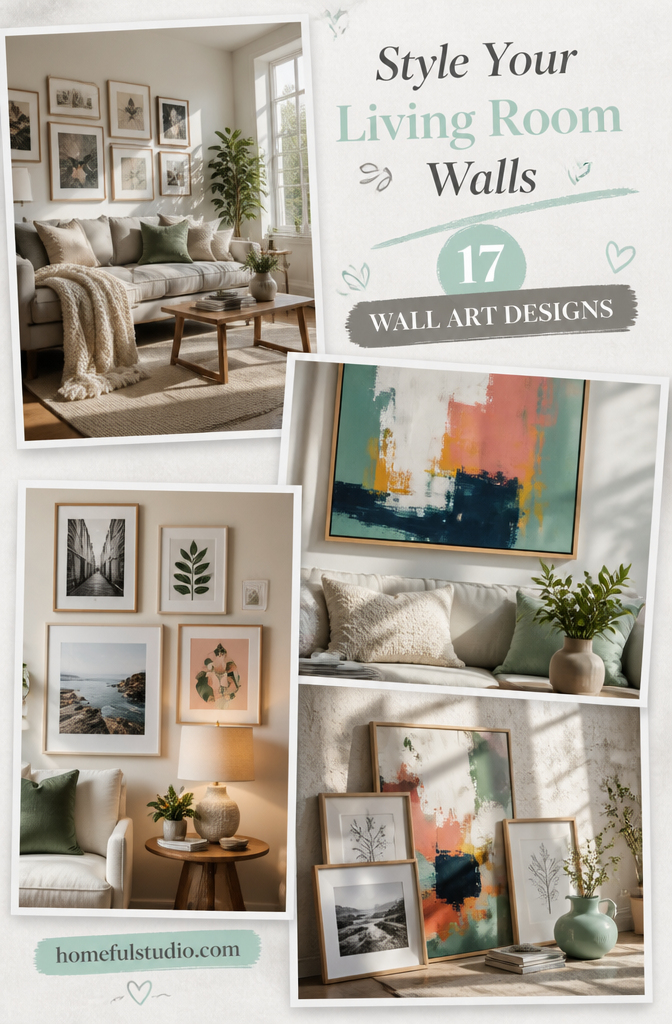
Not every wall art idea has to involve complicated techniques, expensive materials, or hours of planning. The best living room designs often feel effortless because they reflect the people who live there. With a few thoughtful choices, you can create styled walls that add warmth, personality, and visual interest without turning the room into a project site. Use these 17 easy wall art designs as a starting point, then adapt them to your space and tastes.
17 Easy Wall Art Designs for a Living Room
Each idea below is simple to create or assemble and works well as art for home settings.
- Framed fabric swatches in coordinating colors
- A trio of botanical prints arranged in a row
- A single oversized photograph or poster
- Black-and-white family photos in matching frames
- A grid of small square artworks
- Hand-drawn line portraits on neutral paper
- Abstract color blocks painted on canvas
- A collection of postcards or travel mementos
- A woven wall hanging for added texture
- Circular mirrors grouped in a casual cluster
- A round woven tray repurposed as wall decor
- A shallow floating shelf displaying small art pieces
- A row of lightweight baskets or plates
- A framed piece of patterned wallpaper or wrapping paper
- A corkboard or pinboard styled with photos and notes
- A simple gallery wall with mismatched frames
- A large chalkboard or magnetic board for rotating displays
These options range from quick weekend projects to easy collections you can assemble in an afternoon. Choose one that matches your style, then refine the layout so it feels intentional.
Start With the Room’s Focal Point
Before hanging anything, identify the wall that naturally draws attention. In most living rooms, this is the wall behind the sofa, the fireplace surround, or the space opposite the entry. This is where your wall art should feel most deliberate.
- Measure the wall and the furniture beneath it so the artwork relates to the scale of the room.
- Keep the center of the art roughly at eye level for a balanced look.
- Leave enough breathing room around the piece so it does not feel crowded.
- For art above a sofa, aim for a width that is a little narrower than the furniture below it.
A single large piece can make a confident statement, while a group of smaller works adds rhythm. Both approaches work well in living room designs as long as the scale feels right.
Build a Simple Color Story
Effortless wall art usually follows a clear color direction. You do not need a perfect match; you need a relationship between the art, the walls, and the furniture.
- Pull one or two colors from a rug, cushion, or throw and repeat them in the artwork.
- Use a neutral background for busy patterns so the wall does not feel overwhelming.
- Mix warm and cool tones in small doses to keep the palette lively.
- Repeat one material, such as wood, metal, or linen, across the frames and decor.
When your palette is cohesive, even inexpensive pieces can look curated. This approach makes home decor feel connected rather than collected at random.
Choose a Layout That Fits Your Style
The arrangement you choose should support the mood you want. Some layouts feel orderly, while others feel relaxed and collected over time.
Centered and Calm
Place one artwork in the middle of the wall, aligned with the furniture below. This works well with a large print, a round mirror, or a woven piece.
Symmetrical Pair
Hang two matching works side by side above a sofa or console. This creates a balanced look without feeling rigid.
Casual Cluster
Group three or five pieces of different sizes with a shared color or frame style. Keep the edges relatively tidy so the arrangement still reads as one composition.
Linear Row
Line up small frames in a single row. This is especially effective along a hallway wall or above a long, low cabinet.
Floating Shelf Display
Lean framed art on a slim shelf and layer in a small plant or object. This makes it easy to swap pieces seasonally.
Whichever layout you choose, lay the arrangement on the floor first. Adjust spacing and step back to check the overall shape before making holes in the wall.
Hang It With Confidence
Good installation makes even simple art look polished. A few practical habits help you avoid common mistakes.
- Use a level and a pencil to mark positions before drilling or hammering.
- Choose the right hardware for your wall type and the weight of the piece.
- Keep frames away from direct heat sources and heavy curtains.
- Leave at least a small gap between adjacent frames so they do not touch.
- If the wall is textured, use anchors that grip securely.
For heavier pieces, consider a picture rail or a French cleat. For lightweight works, removable hooks can be a practical choice, especially if you like to rearrange often.
Common Mistakes to Avoid
- Hanging art too high, which disconnects it from the furniture below.
- Choosing pieces that are too small for the wall, leaving the space feeling empty.
- Mixing too many frame styles without a unifying color or finish.
- Overcrowding the wall with too many objects, which creates visual noise.
- Ignoring the lighting, so the artwork disappears in shadows or glares under a bright fixture.
- Buying art only to fill a gap instead of choosing something you genuinely enjoy.
Correcting these issues often takes just a few minutes: lower the piece, scale up the frame, simplify the palette, or adjust the lamp direction.
Keep the Look Fresh Over Time
Styled walls should feel alive rather than fixed forever. Rotate one or two pieces every few months, swap the contents of a shelf, or move a frame to a new spot. Seasonal changes can be subtle: a warmer print in autumn, a brighter photograph in summer, or a woven texture when the room needs softness.
You can also create a small “art bin” with spare frames, postcards, fabric samples, and prints. When you want a quick refresh, pull from the bin and rearrange the wall without buying anything new. This keeps your living room designs personal and evolving, while maintaining a calm, cohesive atmosphere.
FAQ
How do I choose wall art for a small living room?
Opt for one larger piece or a compact grouping with a shared color palette. Keep the arrangement tight and centered above the main furniture so the wall feels intentional without becoming crowded.
What is the easiest way to create a gallery wall?
Start with a simple grid or a single horizontal line. Use matching frames or a consistent frame color, lay the pieces out on the floor first, and mark the positions on the wall before hanging.
How often should I change my living room art?
There is no fixed schedule. Refresh when your tastes change, the room needs a new mood, or you find a piece you love. Small, occasional updates often feel more natural than a complete overhaul.
Read more: 17 Effortless Wall Art Designs for Your Living Room


Nhận xét
Đăng nhận xét